
A safety bar is nothing more than a metal post that is attached to a wall. It is genuinely hard to believe that something so plain changes daily life as much as it does.
It does though, and not only by catching somebody in the middle of a fall. A properly placed bar alters the movements of a person, and their level of confidence. It also affects their dependency upon others for support. This guide describes the function of a safety bar and when to use it. It also includes information on how to ensure that it actually performs correctly.
What a Bar Actually Does for the Body
Most people assume that a bar is only there to grab hold of during a fall. That is honestly only a very small part of the job.
The main use of one is actually taking load during a movement. Standing up from a toilet or a low chair needs strength in the legs and hips. A great many older people simply no longer have that strength. Pulling on a solid bar borrows strength from the arms and shoulders. That turns a genuinely hard movement into a manageable one.
The second use of one is balance, and that is easily underrated. Touching something fixed and solid tells the body exactly where it is in space. That is exactly why people rest a hand against a wall while pulling on their socks. A bar does the same job, only it is in the right place and it will not move. Even very light contact with it steadies somebody considerably.
Fear of Falling Is Its Own Problem
There is a pattern here that quietly does a great deal of real damage. Somebody has a fall, or else they come close to having one. Then they are truly afraid of it happening again.
That fear then causes them to do less. They stop showering as often, they start avoiding the stairs, and they sit down more. Muscles become weaker through disuse and the loss of balance gradually increases. The risk of falling then actually rises. The fear ends up creating the very outcome that it was trying to avoid.
But a safety bar disrupts that whole loop. When someone regains their trust in the bathroom, they start using it again as they were before. This is enough to keep them active and moving around. One of the first things that families typically witness is a change in confidence. It sounds like a very small thing, and it really is not.
Signs Somebody Already Needs One
People very rarely announce out loud that they are struggling. They simply adapt quietly instead. Those quiet adaptations are exactly what you should watch out for.
Watch closely how somebody moves around a perfectly familiar room. Do they touch the furniture as they pass, moving from chair to table to doorframe? That is sometimes called furniture surfing. It means they are already using the whole room itself as a handrail. Do they push down hard on a sink to stand up, or pull on a towel rail? Both of those things are dangerous, because neither one is built to take any weight.
Other signs of it are quieter still than that. Somebody starts showering less often, or begins avoiding the upstairs bathroom. Others simply start taking far longer on the stairs. A person who now sits on the edge of the tub before stepping in has already worked something out. They already know full well that they need support. They just do not have any support yet.
Do Bars Help the Caregiver Too?
This is an aspect that is frequently overlooked, and is very important. Bars in use go for the person offering the support as much as for the person taking it.
Consider the practical implications of helping another person. It indicates weighing them while they are standing and supporting them in the shower. Sometimes it means catching them when a knee gives way. All of that falls on a husband, wife or an adult child of the family. Those individuals are not always young ones. Back injuries are very common for family caregivers these days.
A well-positioned bar reverses the situation entirely. The person being helped takes their own weight through their arms. Finally, the caregiver is helping to stabilize them, not to lift them. That’s what makes providing care sustainable over many years, not months. It also maintains dignity. Someone who can take care of the bathroom by themselves will generally prefer to.
Bars Belong Outside the Bathroom
Bathrooms get nearly all of the attention, and they certainly should do. They are certainly not the only place where a bar earns its keep though.
Beside a bed, a vertical bar or a floor to ceiling pole helps enormously. It gives somebody something solid to pull against when getting up. That is a genuinely difficult movement, and it happens at night when the house is dark and quiet. A bar beside an entry door helps a lot while somebody manages their keys out on a stoop. In a long hallway, a rail along the wall turns an exposed stretch into a fully supported one.
Then look carefully at all of the odder spots around the house too. The step down into a garage or a basement is one. So are the back door, and the very top of a steep flight of stairs. Anywhere that somebody habitually reaches out for the wall is worth considering.
Why Anchoring Decides Everything
A bar is only ever as good as whatever is holding it. This is exactly where installations go wrong. It has to reach a genuinely solid structure somewhere behind the wall.
Studs are the usual answer here, and lag screws driven into a stud give real strength. Where no stud sits in the right spot, blocking can be added inside the wall. Heavy duty anchors rated specifically for grab bars will also work there. Plain drywall anchors are never enough on their own, whatever the packaging happens to claim.
Homes around here complicate all of that further. Older houses here often have plaster and lath, and sometimes with tile fixed over the top of it. Newer condos may have concrete or block walls instead. Those walls need their own particular anchors instead. Tile needs the right drill bit and a very slow start, or else it cracks around the hole. A bar has to hold two hundred and fifty pounds of force at any point. Only the fixing itself decides whether it actually does.
Will It Make the House Look Medical?
This is one concern that affects more people than any other, and for good reason. Nobody wants their home to decay into their very own hospital room.
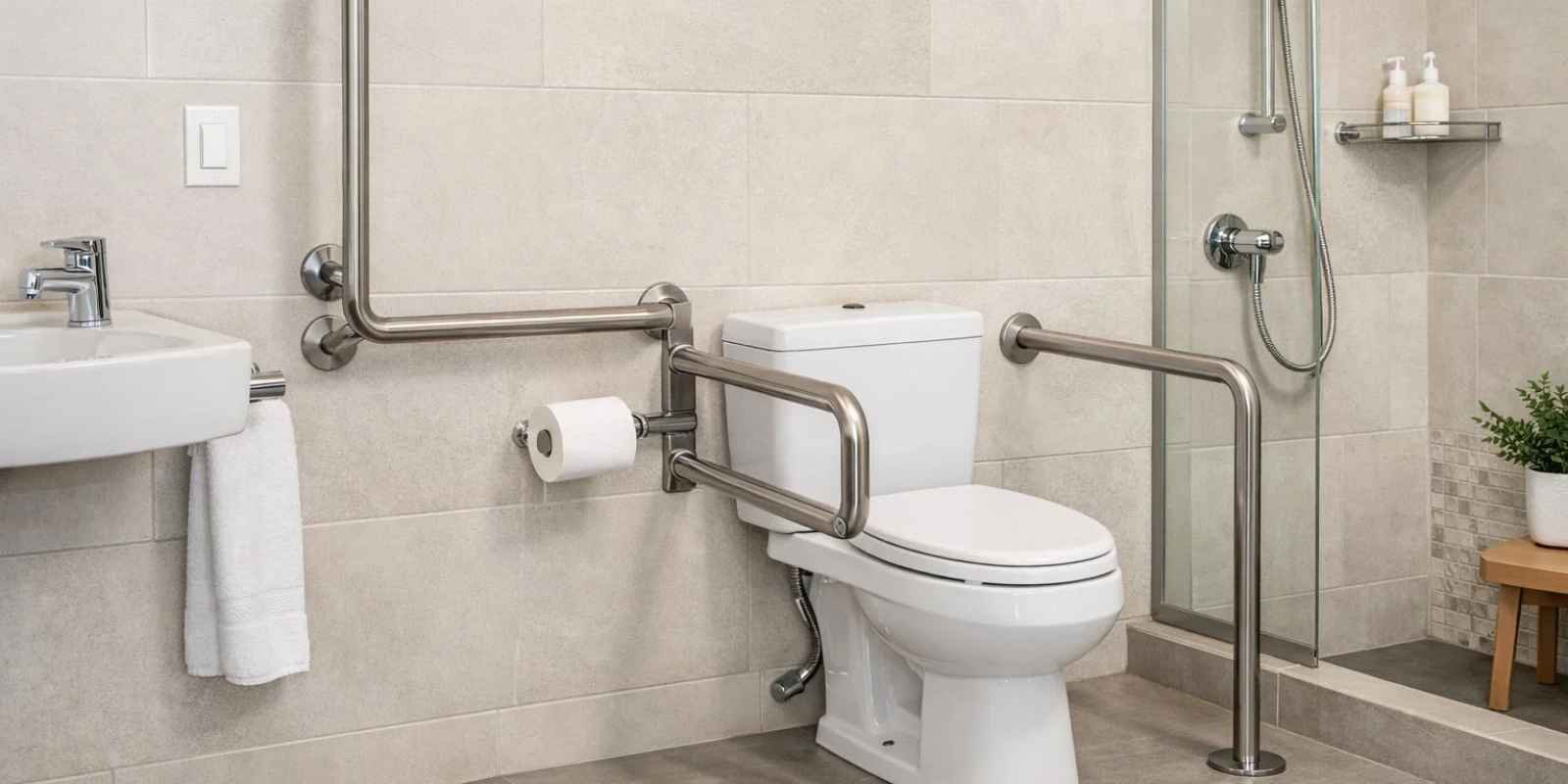
It does not have to look anything like that anymore. The bars are available in brushed nickel, matte black or oil rubbed bronze. Many of those finishes are now in close competition with standard bathroom fittings. Some of them even serve as towel bars or toilet paper holders as well! Some install concealed mounting plates where the screws are not visible at all. There is no clinical appearance at all about them at the time.
There’s also a resale case to consider, but it’s not one many people think of. A well finished bar simply reads as a considered design choice, rather than as an adaptation. They usually do not pose a problem for buyers, and lots of people will need one in the near future themselves. Look at all that versus the true expense of one fall. The choice is basically more likely to be resolved on its own.
Conclusion
Safety bars do a great deal more than catch people. They lend strength during the hard movements and they maintain a steady balance. They rebuild confidence, and they take the physical strain off whoever is helping.
The ones that really work will all share three things. They sit exactly where the hand naturally reaches, and they are anchored into real structure. They also look as though they belong in the room.
Home Safety Bar DC installs bars all around the house and always looks behind the wall first. Tell us where someone is struggling and we will tell you what would help.